


If there is one key piece of the Christmas atmosphere, it is the tree! If you are part of the team that swears by the natural tree but you have wooden floors in your living room, you must take certain precautions. Follow our advice and discover other ecological alternatives.
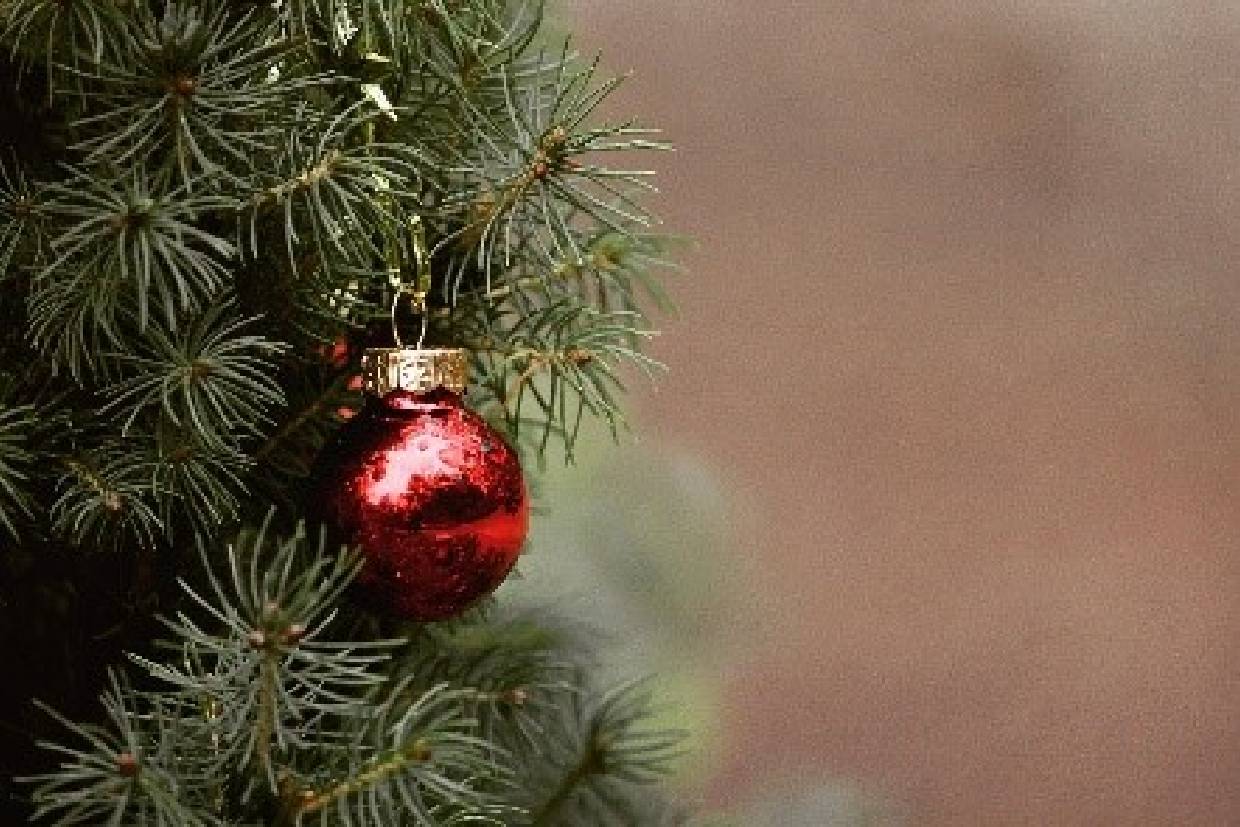
The tradition of the Christmas tree is almost a thousand years old. It was the Alsatians who introduced it by decorating the trees on the squares of their villages with red apples. Since then, it has been present in many homes and its installation near the fireplace (well, not too close though) is part – with the advent calendar – of the signals that bring us back every year to this special atmosphere of the end of the year. If you are part of the team that swears by the natural Christmas tree but you have parquet in your living room, you must take certain precautions. Follow our advice and discover other ecological alternatives
A natural Christmas tree needs to be watered.
The potted Christmas tree is becoming more and more popular because it has the great advantage of keeping its thorns throughout the holiday season and can then be replanted in a garden (or in the wild). A cut tree is more likely to have its needles fall off, especially if it is bought several weeks before Christmas. To keep its needles, it is advisable to water it regularly.
Compared to the artificial tree, the real tree has the advantage of being natural and biodegradable, its carbon footprint is almost zero (except for its transport).
How to protect your wooden floor?
Water and parquet do not mix well, so you must take a few precautions when watering your tree. 1- Check your pot or Christmas tree stand. If the pot is not watertight, change it and/or put a deep enough pot saucer under it.
Some flower pots have painted or varnished sides, which is not always the case for the bottom. If the pot is made of a porous material (e.g. terracotta), moisture can be transferred to the soil. In the long run, this humidity (even low) can damage your floor.
2 – It is obvious but, be careful not to overwater it and not to let the water overflow. Your floor will not like it.
If water has run over your floor, wipe it off immediately and also wipe it off under the tree or pot support. Indeed, if the floor is exposed too long to water on the same place, it will blacken.
This advice is also valid for all your indoor plants in pots, whether they are placed on your floor, your windowsills or your furniture.
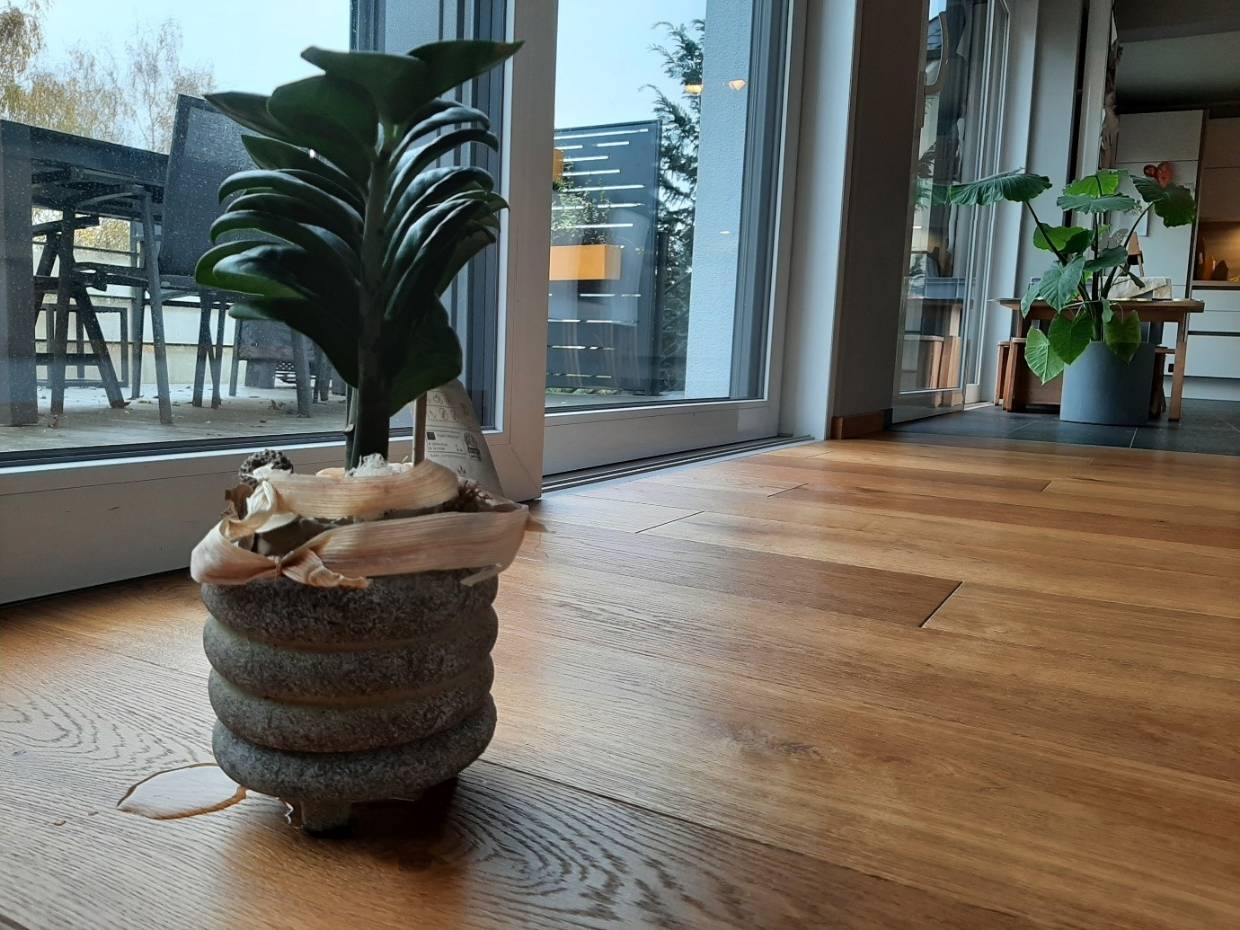
Wipe underneath the pot as soon as possible to prevent a stain from forming.
What will happen if your wooden floor has been thoroughly wet?
Your floor will blacken where it has been in contact with moisture for a long time. The longer the floor has been in contact with water, the deeper the stain will become embedded in the wood and the less easy it will be to remove.
The other consequence of a parquet floor that has been exposed to water for too long is that the wood will work, it will swell and perhaps undulate. In addition, as the wood dries, it will shrink and joints will open between the wood strips.
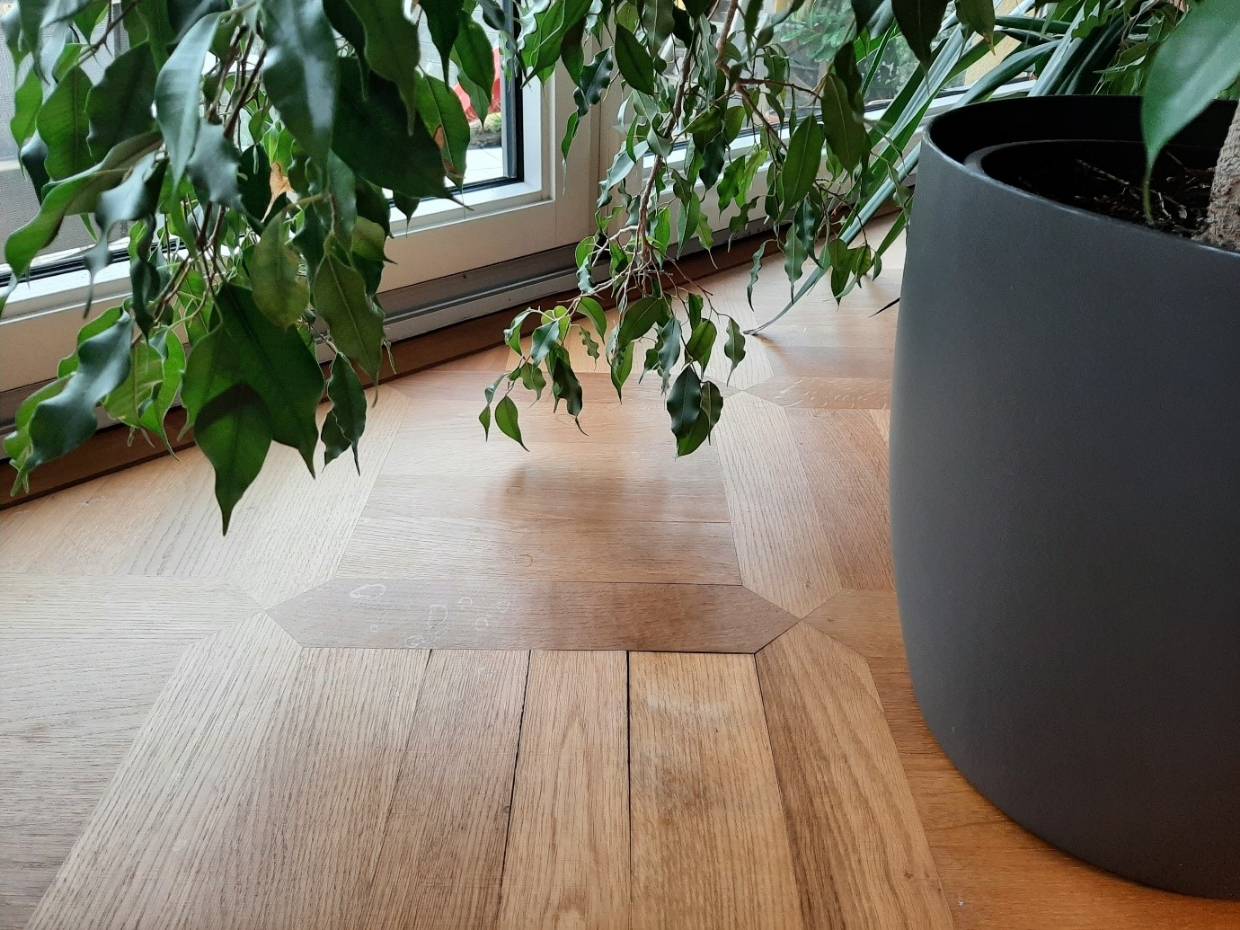
Expanded joints after the water has dried. The parquet will never return to its original shape.
How to remove moisture stains
If your floor has become blackened, it will be necessary to undertake complex repairs because often after several weeks the stain will be so deeply embedded, that it will be necessary to change damaged floorboards. This procedure is possible, but often there will be side effects, such as a difference in color of the repaired surface. In order to restore the parquet to a uniform appearance and color, it will be necessary to proceed with a complete sanding.
Get upcycling and get creative
There are plenty of great alternatives that don’t require cutting down trees and don’t need to be watered. Sure, the smell and atmosphere aren’t quite the same, but with a little imagination you can get some really unique and amazing results. The internet and especially Pinterest or Instagram are gold mines for finding original ideas.
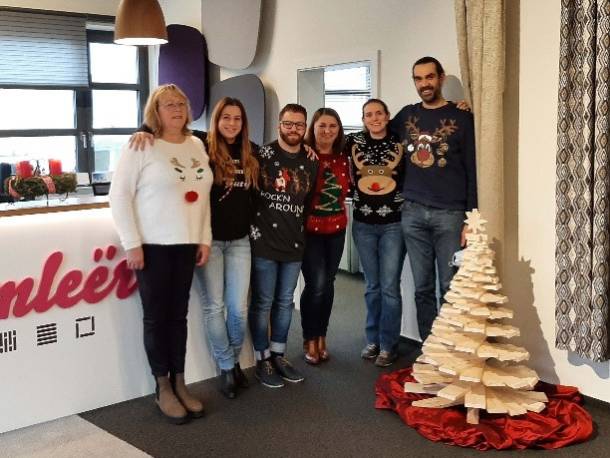
On our side, we had fun with this tree made of wooden planks.
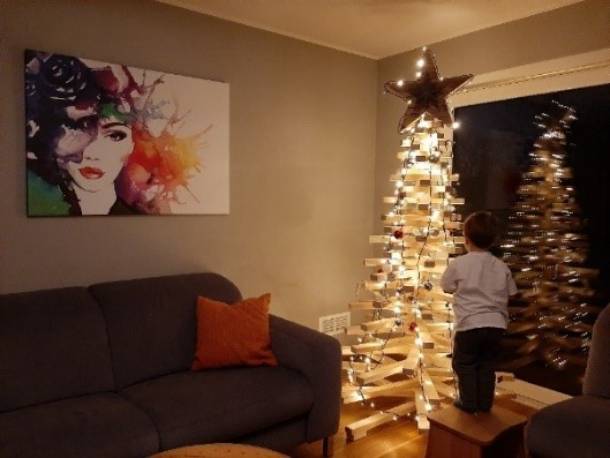
One of our employees did the same thing in a much larger size
In our business it is unfortunately not possible not to produce waste and spare materials. But not everything that is no longer useful to us is totally useless or unusable. That’s why we collect all these materials, so that they can find a second life through DIY. So, to all the do-it-yourselfers, artists, educators, teachers: don’t hesitate to drop by to see if there are materials that inspire you. You will regularly find: old collections with various samples, pieces of fabric, lino scraps, parquet strips, wood, old blinds, one-way pallets…